Angioplasty vs Bypass Surgery: Which One Is Suitable?
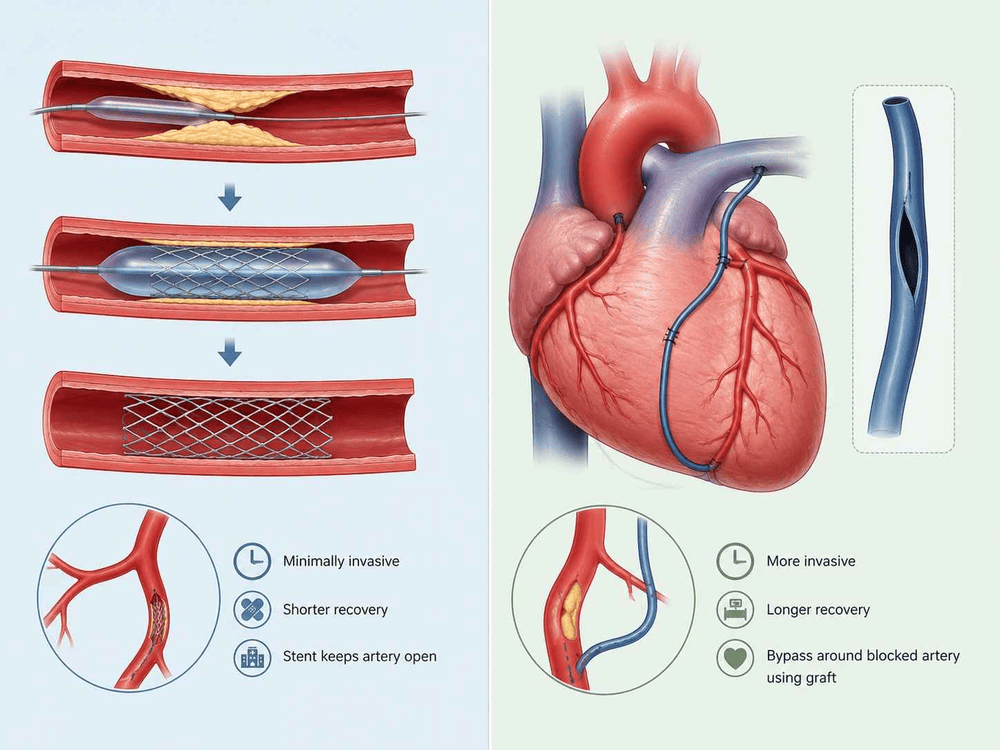
This question often arises after a patient learns that their artery is narrowed or blocked, disrupting the blood supply to their heart. It is then that the cardiologist has to choose between two heart procedures, angioplasty and bypass surgery.
It is known that angioplasty is minimally invasive, while bypass surgery is not. The difference also reflects in the respective surgeries’ recovery times. The angioplasty recovery time is shorter than that of bypass surgery, which demands more patience during recovery.
So, how do cardiologists decide between the two!? The answer to this question depends entirely on a few factors, including the patient’s heart health, their age and their medical history. In different patients, Coronary Artery Disease (CAD) can manifest differently. The question is never "which procedure’s better?" It’s always "Which procedure is better for the concerned patient?"
The Procedural Difference Between Angioplasty And Bypass
Think of the two surgeries doing the same thing: one removing a blockage so the blood flows freely, the other building a new passage for the blood. The choice between the two treatment modalities depends entirely on the severity of the CAD.
Angioplasty is generally recommended when there are one or two narrowed or blocked arteries, which can be treated with a stent. On the other hand, bypass surgery is a preferred option when there are multiple blockages in the arteries or when the patient has diabetes.
In the angioplasty procedure, with the help of a catheter, a thin wire with a small balloon at its tip is guided toward the narrowed or blocked spot. Once it reaches the narrowed spot, the balloon is inflated, the plaque is removed, and the stent (a metal implant) is placed to keep the artery open. As it is a minimally invasive procedure, angioplasty recovery time is also minimal. In case there are no complications in the procedure, the patient can leave for home the same day.
On the other hand, bypass surgery involves creating a graft to bypass the blocked artery, allowing blood to flow to the heart muscles. This procedure is more complex, and the recovery time is longer. Research has shown that patients with extensive coronary artery disease are the ones who benefit more from bypass surgery than angioplasty.
While both procedures effectively improve blood flow to the heart, the choice between the two depends on the patient’s circumstances and the extent of the blockages.
While patients focus more on the surgery, the cardiologists worry about what happens after the patient’s discharge.
Precautions After Angioplasty:
Immediate Precautions –
Rest! Avoid heavy lifting or strenuous physical activities at all costs.
If a stent is placed, the medication after angioplasty must be observed exactly as they are prescribed to avoid the formation around the stent.
In case you feel chest pain or notice any swelling, bleeding, or extreme pain, fever or chills, or numbness in the arms or legs, contact your doctor immediately. Only if it is mild bruising is it okay.
Long-Term Precautions -
Stop smoking, as it increases the chances of clotting in the arteries.
Eat a heart-healthy diet; it promises long-term outcomes.
Keep your cholesterol, diabetes, and hypertension in check.
Keep your alcohol intake to a moderate level. If your cardiologist insists, you might even have to stop drinking entirely.
Maintain a healthy weight, as being overweight puts extra pressure on your heart.
If your work stresses you out, it won’t work for your heart in the long run and might leave you with further complications.
Post Angioplasty Care: Lifestyle That Is Planned Around Heart
Medication After Angioplasty
The medications after the angioplasty procedure are to minimise further heart complications. If you complement your medications with a heart-healthy lifestyle, they’d help you recover faster.
General Medications after Angioplasty:
Antiplatelets – the blood thinners that minimise the chances of blood clot formation around the stent, which considerably reduce the chances of a heart attack.
Lipid-lowering medication – Also known as Statins, these medications are used to control cholesterol levels in your blood, which further reduces the risk of heart attack and stroke
Blood Pressure medication – given to those who have pre-existing heart conditions, such as Hypertension
Diet After Angioplasty:
A diet that is rich in Vitamins, Minerals, antioxidants, and Dietary Fibre and one that is devoid of excessive salts, sugars, and unsaturated fats, is considered an ideal heart-healthy diet. Include more fruits, green vegetables, nuts, and seeds in your diet to further reduce the risk of heart disease.
Exercising After Angioplasty:
Being physically active helps patients recover faster. Exercising helps manage a healthy weight, hypertension, and keeps cholesterol levels in check.
After Angioplasty, Lifestyle Is Care
No matter which procedure cardiologists choose to restore your blood supply to your heart, or how much recovery time there is, it is your lifestyle choices after the surgery that make the long-term impact. Precautions must be taken seriously, the medications must be observed as prescribed, and the heart must be taken care of. In case there is any doubt or apprehension, the first person one must consult with is one's cardiologist, and that too at the earliest. When it’s about the heart, timing is everything.