Why Your Heart Rate Increases When You Are Sick?
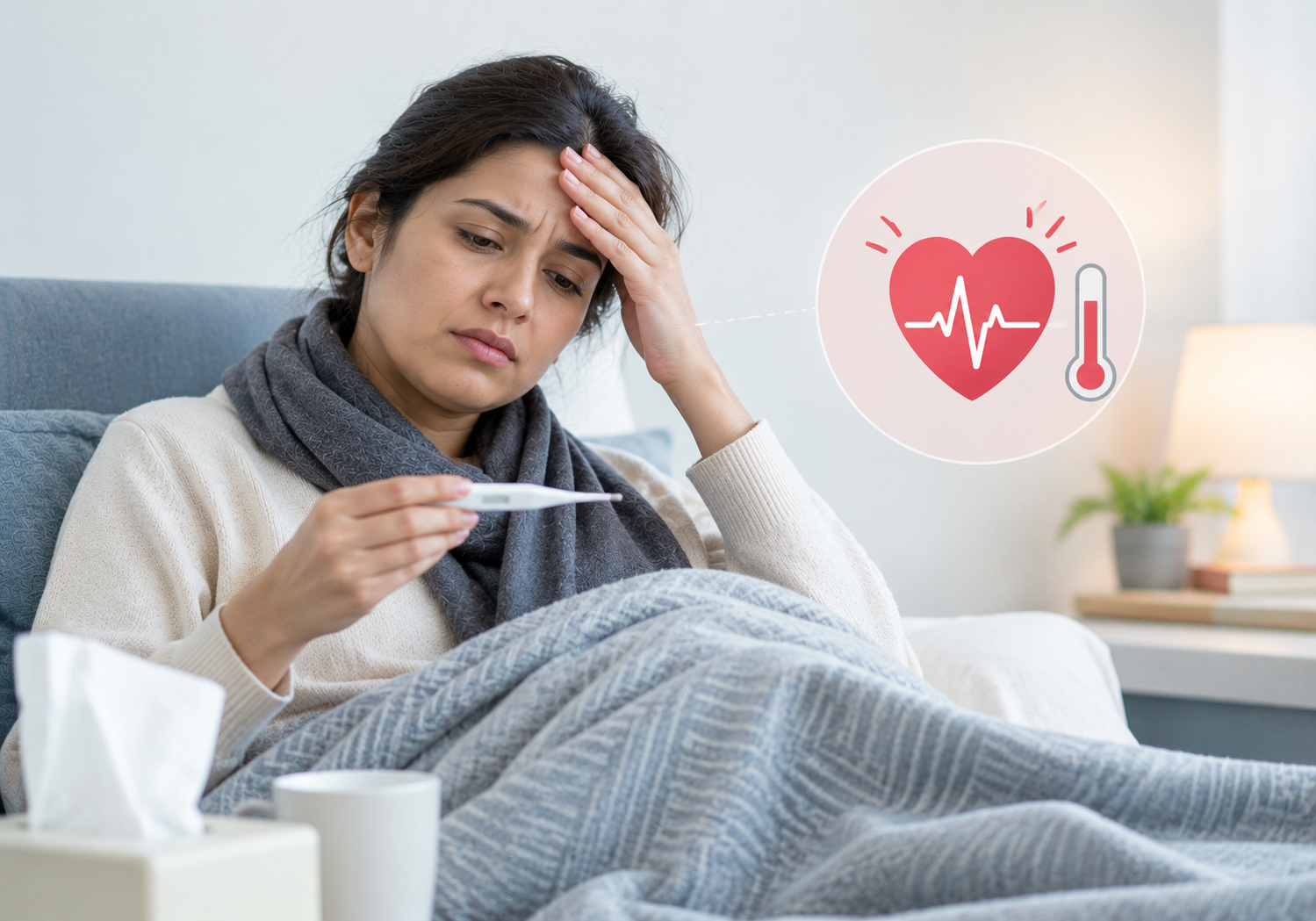
Have you ever checked your pulse while having a fever, cold, flu or another illness and noticed that your heart is beating faster than usual? A higher heart rate during sickness can happen even when you are lying in bed and resting.
Heart rate is influenced by what is happening throughout the body. When you are sick, factors such as fever, dehydration, infection, pain, stress, and certain medicines can affect how quickly the heart beats. Understanding these changes can make it easier to recognise what your body is responding to.
Fever Can Make the Heart Beat Faster
Fever is one of the most common reasons for a higher heart rate during an illness. When the immune system responds to an infection, body temperature can rise. A fever also increases the body's metabolic activity, which is accompanied by increases in heart and breathing rates.
As body temperature rises, the cardiovascular system adjusts to the body's changing demands. This can make your pulse faster than it normally is when you are healthy and resting.
Dehydration Can Affect Your Pulse
Illness can make it harder to maintain normal fluid levels. Fever and sweating can increase fluid loss, while vomiting or diarrhoea can cause additional losses. Drinking less than usual when you are unwell can also contribute to dehydration.
When the amount of fluid circulating in the bloodstream decreases, less blood returns to the heart with each heartbeat. The body can respond by increasing heart rate to help maintain blood flow.
This is one reason a racing or noticeably faster pulse can sometimes accompany dehydration.
Your Body Is Responding to Infection
An infection activates the body's immune response. This involves changes throughout the body rather than affecting only the area where the infection started.
The body's response to illness can place additional demands on the cardiovascular system. Mayo Clinic notes that the sinus node, which normally controls the heart's rhythm, can signal the heart to beat faster when the body is under stress from illness.
This response can occur with different types of infections and is not necessarily related to a problem originating in the heart itself.
Pain and Stress Can Also Raise Heart Rate
Being sick can be physically and mentally stressful. Pain, discomfort, anxiety and poor sleep can all influence heart rate. The American Heart Association lists emotions and pain among factors that can increase pulse.
Even if you are spending most of the day resting, your body may still be dealing with several forms of stress at the same time.
Medicines May Play a Role
Some medicines used while treating cold, flu and other illnesses can affect heart rate. Certain medications can increase the pulse, while others may slow it.
If your heart rate changes after starting a medicine, the medication and dosage should be considered alongside other factors such as fever, hydration and the illness itself.
What Happens as You Recover?
As the illness improves, factors such as fever, dehydration and physical stress may also settle. Heart rate can therefore move back toward a person's usual resting level.
It is useful to know your normal resting heart rate because a change from your personal baseline can provide additional context. For most adults, a resting heart rate between 60 and 100 beats per minute is generally considered normal, although individual patterns vary.
The term heart rate recovery refers to how quickly the heart rate falls after exercise when activity stops. It is different from the temporary rise in heart rate that can happen during illness, although both involve changes in how the body regulates heart rate.
When Should a Faster Heart Rate Be Checked?
A faster pulse during illness can have several possible explanations, but it should not automatically be attributed to the illness. A very fast or irregular heartbeat, particularly when accompanied by chest pain, shortness of breath, dizziness, or fainting, warrants medical evaluation.
In short, your heart rate can rise when you are sick because your body is responding to changes such as fever, infection, dehydration, pain and stress. Looking at the heart rate alongside your other symptoms and your usual resting rate provides a more useful picture than focusing on one number alone.